From Collectibles to Spectacle: How MM2 Skins Betting Turns Virtual Items Into Entertainment Experiences
Digital items have changed far beyond their original purpose. Cosmetic assets that once existed simply as visual upgrades now function as recognizable parts of online culture. According to Newzoo, digital ownership and virtual economies continue to influence how users interact with games and online communities, especially when visual identity and collectible value become central to the experience. People increasingly view virtual items as pieces of participation rather than simple accessories.
Discussion around these systems has also expanded into broader entertainment spaces where communities exchange ideas, showcase collections, and observe how digital economies evolve. Platforms that discuss MM2 skins betting are often referenced as examples of how virtual items move beyond simple game mechanics and enter conversations about collectible culture and shared digital experiences.
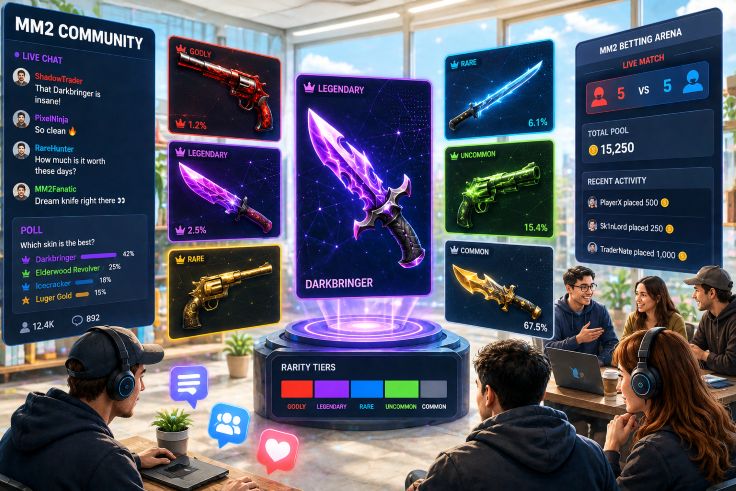
Cosmetic Items Became More Than Decoration
Early online games treated cosmetic items as small additions. A different outfit, color variation, or visual effect helped personalize a character but rarely carried broader meaning. Over time, that changed. Certain items became harder to obtain. Some were available only during specific periods, while others became associated with events, updates, or community milestones.
As availability shifted, perception changed as well. Digital items started behaving more like collectibles. Their value increasingly reflected scarcity, community interest, and symbolic meaning rather than practical gameplay advantages.
Traditional collecting follows a similar pattern. Sports cards, comic books, and limited-edition merchandise gained significance because people attached stories and identity to them. Virtual items now occupy similar spaces. Instead of physical shelves, users organize digital inventories and showcase selected collections across online communities.
Rarity Creates Attention
People naturally pay attention to things perceived as uncommon. Researchers from Harvard Business Review have discussed how scarcity often influences perceived value and engagement patterns in consumer behavior. Digital environments frequently mirror that same tendency.
When users encounter limited virtual items, interest often rises. Visual design also plays a major role. Distinct colors, effects, animation styles, and recognizable appearances can turn ordinary cosmetic elements into memorable pieces of content.
Yet rarity alone rarely explains the appeal. Context matters. A collectible attached to a specific event or community memory may create stronger emotional connections than one defined solely by limited availability.
That emotional response helps explain why audiences sometimes spend time discussing items even when they provide no gameplay benefit. Visual identity can carry social meaning, and social meaning often influences engagement.
Communities Transform Items Into Shared Experiences
Entertainment rarely exists in isolation. People discuss television series, compare music tastes, and analyze sports moments because shared experiences create stronger emotional investment. Digital communities follow a similar pattern.
Streaming platforms, social channels, discussion groups, and online forums contribute to conversations surrounding virtual collectibles. Communities compare appearances, discuss rarity perceptions, and revisit memorable moments associated with specific items.
These interactions often turn individual experiences into collective ones. Someone may appreciate a digital item personally, while another may associate the same item with a community event or online trend.
As these discussions continue, digital collecting systems increasingly become forms of participation rather than isolated activities. Virtual skin-based gaming activity demonstrates this broader shift. The focus frequently extends beyond the item itself and toward observation, reactions, and ongoing social discussion.
Entertainment Is Becoming More Interactive
Entertainment habits continue changing across digital spaces. Passive viewing remains common, but audiences increasingly participate in experiences rather than simply observe them.
According to Deloitte Digital Media Trends research, modern users increasingly value interactive forms of engagement where communities and participation shape entertainment value. Viewers discuss events live, contribute opinions instantly, and influence trends through social interaction.
Virtual item ecosystems fit naturally into this shift. Collecting and observing digital assets can become part of larger community behavior. Visual presentation, rarity discussions, and community narratives all contribute to ongoing engagement.
This development reflects a wider pattern across online culture. Digital experiences increasingly merge entertainment, social interaction, and personal expression into connected ecosystems.
Broader Questions Around Digital Culture
Despite growing interest, virtual item systems also raise questions. Discussions frequently involve ownership, perceived value, and the way digital environments shape spending behavior.
People may assign emotional importance to assets that exist entirely online. While this creates engaging experiences, it can also blur distinctions between entertainment and financial perception.
These conversations have become increasingly important as digital economies continue expanding across gaming environments and online communities.
There is another consideration as well. Activities connected to virtual item wagering or collectible-based risk systems involve uncertainty. Outcomes are unpredictable, and participation may carry financial consequences. Individuals should approach these environments carefully and remain aware of potential risks.
READ ALSO: Discover Play-to-Earn Concept with Roblox’s Casino-Style Gameplay
Conclusion
Virtual items have evolved far beyond decorative accessories. They now function as symbols of identity, conversation starters, and components of larger entertainment systems. Communities help transform simple digital assets into experiences that people watch, discuss, and remember.
As digital culture continues evolving, forms of collectible-based gaming activity and virtual item wagering systems may remain part of broader discussions surrounding online engagement. At the same time, awareness remains important. Entertainment experiences involving uncertainty should be approached responsibly, with attention given to personal limits and informed decision-making.
Warning: Gambling-related activities involve risk. Participation should always be approached responsibly. Outcomes cannot be predicted, and individuals should avoid spending beyond personal financial limits.